Author Archive

Nuclear Energy

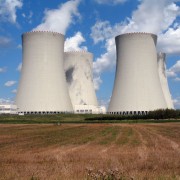
Abstract China has a major expansion of nuclear energy planned for 2020, and again for 2030.  It is currently the country with the largest number of power stations in construction, and new power stations being planned. There are 13 reactors in operation and 25 more under construction. Meanwhile, preliminary work is being undertaken for dozens of nuclear projects that await government approval. China, which has contributed over 60% of the global total new builds since 2006, and in addition to building large quantities of power stations, it is also building some of the most advanced reactors in the world. The country has a target of attaining 70 gigawatts (gW) of nuclear capacity by 2020. Importantly, China is both buying up large amounts of uranium, and also expanding the capacity for domestic uranium mining, especially in Guangong. All of this is having an important impact on world uranium markets. Gansu province, in the north west of China, will also become a centre for processing nuclear waste from all over Asia, in partnership with the French company Areva.

It is widely thought that the government plans, although incredibly ambitious, are not unrealistic to achieve in China, despite the fact that they would be unrealistic in most other countries, and it will require constructing and bringing them online much faster than has occurred in other countries to date. The nuclear disaster in Fukushima had an important impact. It sparked major media debate, and a temporary government reconsideration, especially relating to safety issues, and especially in coastal areas. A moratorium on further development of nuclear power stations in coastal areas in coastal areas was put in place.  Major energy think-tanks believe that the impact of this on the government’s nuclear programme will just be slowed down slightly, but not significantly altered. Policy framework is being developed and strengthened in relation to safety issues, and the budget for these areas has been increased. Projected expansion is still considered realistic within the timeframe stated by government. One important consequence of Fukushima is that regional cooperation on nuclear safety between Japan, China and South Korea has strengthened in the wake of the disaster, something that is widely seen as a positive development.

The nuclear sector is being developed by central government and state owned enterprises. It has been making use of foreign technology, but Chinese nuclear industry is growing rapidly and becoming less reliant on foreign technology. With the exception of China Power Investment Corp, the country’s “Big 5” power generating companies are not yet allowed to develop nuclear power.  Nuclear power development qualifications have only been granted to China National Nuclear Corp, China Guangdong Nuclear Power Group and China Power Investment Corp. China Guangdong Nuclear Power Group has the most nuclear projects currently under construction of any other company globally and is set to become the world’s largest nuclear developer over the next 10 to 15 years. The world’s major reactor manufacturers, including the French company Areva and US-based Westinghouse, are building their most advanced designs in China. Delays in other countries may even result in China becoming the first country in the world to use the EPR (European Pressurized Reactor). Importantly, Chinese companies are also actively buying up uranium supplies to fuel the reactors.

So far,  environmental and other NGOs in mainland China are initiating debates on nuclear development and safety concerns. There is still little public awareness and understanding of the technology and its implications (including risks), compared to in other countries.  Fukushima did generate important debate. As nuclear energy is such a central pillar of government energy plans, many people consider that it is impossible to have an anti-nuclear perspective. Instead the focus is on safety, transparency and public participation. Some NGOs have been active in trying to learn from European experiences with nuclear energy, and antinuclear movements. This has included visits to Germany and translation of German educational material on nuclear energy.  There have been a very small number of small protests about nuclear energy, including a commemorative action to mark the 25th anniversary of the Chernobyl disaster, involving some students who were arrested. There are also isolated incidences of protests having delayed at least one new nuclear power station.

In  Hong Kong the electricity includes supply from nuclear energy from mainland China. The Dayawan reactor, which is about 50 km from Hong Kong in mainland China, was built, by agreements between the two governments,  especially to supply Hong Kong. Currently, the Hong Kong government has anticipated increased energy demand and has asked the Chinese government to expand the capacity of Dayawan. There have been protests against the Dayawan power plant, both before and after the transfer of sovereignty to China. This included about 1 million signatures that were collected and presented by Hong Kong groups to the Beijing government, calling for closing of Dayawan, in the wake of the Chernobyl accident. Greenpeace Hong Kong are advocating to reduce reliance on nuclear and are against expanding Dayawan’s capacity. They are proposing energy efficiency and wind energy (especially offshore) as alternatives. However, their position is not antinuclear per se, as they do not view this as realistic. Another coalition, No Nukes Hong Kong,  is calling for an outright ban on nuclear energy, and closing down Dayawan. They express frustration with more moderate perspectives. In addition to the Dayawan plant, the Chinese government now plans for a number of new reactors to be built in the three surrounding provinces, by 2020. This will have major implications for Hong Kong.

Author
Publisher
Link
Attachment Sorry, no attachments exist.
Featured

Hydropower

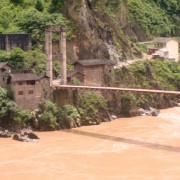
Abstract A massive expansion of large-scale hydropower is currently underway in China, and now most rivers in China have some form of hydropower development project, especially in the water rich areas of Sichuan, Yunnan and Tibet.  Half of the world’s large dams are in China. Many of the dams in southern China also involve trans-border rivers. In the past, there was important use of small-scale hydropower for neighboring communities, but now nearly all development is large scale cascaded hydro, that generates electricity which is transported to the Eastern coastal areas where energy demand is high. The current major expansion is being driven as part of a strategy to reduce dependence on coal in China’s overall energy make-up. A consequence of this is that the hydropower sector is becoming increasingly powerful.

China’s river resources belong to the state and the government is responsible for decisions concerning their management, use and development. In 1958, the 5th Session of the 1st National People’s Congress resolved to consolidate the Ministry of Water Resources and Ministry of Electric Power Industry into Ministry of Water Resources and Electric Power. Later, in 1979, the Ministry of Water Resources and Electric Power was separated into two ministries. The institutional reform of 1982, led to the Ministry of Water Resources and Ministry of Electric Power being recombined into the Ministry of Water Resources and Electric Power. In April, 1988, the 1st Session of the 7th National People’s Congress passed the institutional reform of the State Council to set up Ministry of Water Resources. This was in turn reorganized in 1988.The hydropower sector has gone through a further major restructuring, since 2000.

This has meant that the smaller local state departments, which were previously responsible for hydropower, have now been consolidated into larger state owned enterprises. Consequently, these new (or reconfigured) state owned enterprises are becoming increasingly powerful and wealthy enterprises, gaining access to existing physical infrastructure as well as natural resources for further development. Together with local governments, these state owned enterprises control most of the development process. They are rapidly coming to lead the sector at a global level, and are expanding internationally, especially in Asia, Africa and Latin America. Some key corporations are Sinohydro, Datang, Zhongdiantou, Huadian, Huaneng, Gezhouba, Southern Grid.

Another important aspect is the question of financing. Within China itself, the majority of large hydro projects are receiving financing from the Clean Development Mechanism, or have received such funding. Chinese financial institutions have overtaken the World Bank as the main funder of dam projects throughout the world. Chinese banks and companies are involved in constructing over 200 large dams in approximately 50 countries, especially in Africa and Southeast Asia.

Current government plans are highly controversial, as they promote developing the installed capacity of hydropower to the maximum, pushing against the maximum internationally recognized limits of the capacity of rivers. As with dams throughout the world, there are huge social and environmental impacts associated with the dams. These impacts include: massive displacement, which in extremes cases, such as the Three Gorges Dam, has reached several millions. In 2007, (then) (check) Prime Minister Wen Jiabao reported that dams had displaced no less than 23 million people in China. Other problems include the submersion of fertile cultivated fields; non-transparent resettlement processes, in which communities are not consulted and do not participate in the decisions which affect them. Frequently the compensation is inadequate.  Following resettlement, communities have few economic possibilities and face worsened economic conditions.

Many existing dams, as well as those planned for the future, in the southwest region, are at high risk of earthquake damage. The collapse of a dam, or landslides in the area, will have a domino effect that impacts the whole downstream section of the river and its inhabitants. The dam construction process also has major social and environmental impacts to the surrounding communities, including creating difficult and unsafe transport conditions due to landslides and other disruptions. Dams have also seriously impacted on China’s biodiversity, causing fisheries to plummet, and threatening the endangered giant Chinese sturgeon and pushing other species, such as Yangtze River Dolphin, to extinction. In the case of the cross border dams in the southern part of China, many of these social and environmental problems occur also in downstream neighboring countries.

These problems are often acknowledged by the government and there is advanced social and environmental legislation in place to deal with this, especially in relation to questions about compensation and resettlement. However, these mechanisms are often implemented inadequately, and local governments have vested interests that may hinder implementation. Although Environmental Impact Assessments are required, project developers often fail to complete them before construction begins, thus making it very difficult to stop destructive projects. The fines for violating environmental laws are not high enough to have a serious impact.

Compared to other energy issues, hydropower is an area of important civil society activity, and important successes have been achieved by campaigns. Affected communities have also waged important struggles and protest against dams. However, conditions for organizing are very difficult. Firstly, it is hard for them to do much, since the land is state owned, so the government can decide what happens to it regardless of local opinion. Organizing efforts are met with heavy repression and labelled as unprofessional. Another important issue is the local perception of dams. Frequently communities believe government promises that they will get better land and that it is good they will be moved. Confusion exists about whether projects are private sector projects or government ones. Government projects still have a high level of popular trust, so if a dam is seen to be a government project people believe it must be good. However, sometimes after people have directly suffered the impacts, many lose trust and get angry, and this is when protests start.

Consequently, it is very hard for organizations and campaigners to be outright anti-dam, and this position is not considered as realistic, or even desirable. It is seen as more realistic to campaign for making the dams safer, improving the terms and conditions of displacement, resettlement and compensation, as well as distribution of the economic profits to affected communities. More transparency, community and civil society participation are demanded.  Some of these campaigns have had important successes. However, these campaigns are on specific local dams only and national coordination between the struggles at different water basins is extremely difficult. This is both due to China’s size, and also the dangers of repression.

Documents from Chinese governmental institutions

International Rivers Reports on Dams in China and China’s role in building dams globally

China’s role in building dams globally

Additional reports from civil society organizations

Recent Articles

Author
Publisher
Link
Attachment Sorry, no attachments exist.
Featured

Coal

Abstract When the People’s Republic of China was founded in 1949, its annual coal production was just over 30 million tons. China’s coal production is now the largest in the world. In 2008, coal production was approximately 2.7 billion tons, roughly 40% of total world coal production. By 2011, its output was approximately 3.5 billion tons, a figure 3.5 times that of the next largest coal producer, the U.S.A., according to the BP Statistics Review of World Energy. The sector employs close to 5 million people, if you only include larger enterprises, and if enterprises of all sizes are included, the figure is close to double this. However, it is difficult to be exact with such figures.

Between 70 and 80% of China’s electricity is generated by coal.  Its percentage in the country’s energy make up is being very slowly reduced, stabilizing at around 70% over the last years. However, the overall volume of coal consumption is continually increasing as the country’s energy demand goes up. The government is engaged in very serious efforts to “clean up” the sector as much as possible, within the constraints set by the fact that coal simply is, and will continue to be, the most “dirty” energy source around, and has emphasized R&D for advanced technologies. This includes technologies such as coal gasification, processing and conversion, integrated gasification combined cycle (IGCC), supercritical and ultra-supercritical power generation, and large-scale circulating fluidized bed (CFB), and coal gasification-based poly-generation technology. As the world’s biggest coal producer, and having one of the largest proven coal reserves in the world (after Russia and the USA), China’s coal needs are mostly met from domestic supply. However, it is also importing increasing amounts from Indonesia and Australia.

Safety is considered a very major area for government intervention. The official number of worker deaths in accidents reached a peak of almost 7,000 in 2002. One of the main reasons for this was due to the number of small mines in operation, due to China’s history of developing village level industries, combined with the rapidly increasing demand. The government has successfully brought this number down, quite dramatically in recent years, through a twin process of closing smaller unsafe mines, and through mechanization. However, there are still large numbers of deaths of miners (approximately 2500 in 2010), substantially higher than most other coal mining countries in the world. Also, there is sometimes a problem of the smaller mines being reopened due to increased demand for coal. Frequently, a strong central-local government tension exists, as many local government officials are close to the owners of the small coal companies.

Although before the Chinese revolution there was major labour unrest amongst coal miners, and there continue to be sporadic strikes, it seems that there is not a high level of organization amongst workers, and that it is one of the very difficult sectors to organize in. Reports are sketchy, but there have been numerous strikes involving thousands of coal miners in Shanxi Province, Guizhou Province throughout the last years.  At least some of the mines, especially the larger and more modern state owned ones, have high level of training and rely on a professionalized and relatively well paid technical workforce. In such cases, health and safety regulations are strongly enforced.  Different levels of safety conditions exist alongside one another. In some of the modern mining areas in major mining areas, such as Datong, housing is being slowly improved and modernized, partly in an effort to improve conditions and partly because of subsidence. Subsistence is a major area of concern in some of the areas where extensive mining has already occurred.

Other major areas of concern are the environmental and land problems caused by coal. Again, the government is very much aware of these problems, and treats them as a major area of concern. In addition to making an enormous contribution to climate change, through high levels of CO2 emissions, the local impacts of coal use in China are very damaging. This includes: dust , both near the mining and along the transport route; subsidence from mines, especially in areas with a long mining history, such as in Shanxi and Inner Mongolia; water contamination; respiratory and other health problems of workers and nearby communities; and land conflicts with ethnic minorities in Inner Mongolia. Another key issue is that the coal sector takes up an enormous share of the country’s transport infrastructure, as the coal is not mined at the geographical location as where it is needed for consumption. This means that there are huge traffic problems due to trucks and trains transporting it.  Major delays, often of several days or even weeks, are routine. At times this makes it difficult to ensure supply.

The question of ownership, control, and pricing in the coal sector are all of great importance. In recent years, there has been a massive process of concentration of companies, led by the government. State owned enterprises have grown in size, at least in some locations, such as in Datong, and the major players operated in multiple locations. Many small companies have been closed by legal orders. Since around 2002, Coal has become increasingly profitable, which encourages increased extraction, from both national state enterprises and private enterprises. Speculation of coal price is becoming important and quite influential on wider economic development. At the same time, the electricity companies claim to be near bankruptcy due to high prices. The central government is going to great efforts to maintain a high degree of stability for the coal price, as it fears the political instability that is likely to result if the price becomes too high. This is becoming a big political battle. Expansion of Chinese mining companies into foreign markets is still in early stage, though likely to intensify and accelerate in the near future, as Chinese companies are already beginning to buy foreign companies in order to get hold of the technology.

Despite, and probably also because of, the fact that coal plays such an important part in China’s energy mix, there are very few “civil society” organizations working on it, either in relation to energy, or workers, or the environment. Even though it is incredibly important and has many serious social and environmental problems associated with it, it is a very difficult area for organizations to work on, due to strong governmental control and lack of transparency in the sector. Owing to the combination of the sheer quantity of coal that is used, the quantity of coal that exists in China, the political and economic power of the industry relative to other branches of the energy sector and the country’s massive dependency on coal, it is extremely difficult, if not impossible to talk about phasing out coal production and use in China. The only strategy that is widely perceived as viable is to look for ways to make it both safer and cleaner, to the extent that is possible

Coal and the Environment

The following articles deal with the environmental and the health impacts of coal. These are the most recent documents which exist in this field, and are all from Greenpeace China, which is the main civil society organization working on the environmental impacts of coal. A particular focus is on the question of how the price of coal and be made to incorporate the social and environmental costs.

No list view with the name 'list1353648117429' was found.

Coal and workers

The following three documents deal in considerable depth with questions relating to workers in the coal sector, and contain political and historical analysis of how the sector has evolved and continues to evolve. They offer important analyses for a general understanding of coal in China, and of the changes brought about by the restructuring of the last twenty years. Although there have been important changes in the last few years and the documents are not completely up to date, they nonetheless provide a solid basis for understanding the background to understanding these recent changes.

No list view with the name 'list1353579471624' was found.

Coal, from the point of view of international and regional policy makers and think tanks

The following articles provide analysis of the Chinese coal sector within a wider perspective of coal globally, looking at the industrial, institutional and  commercial aspects of China’s coal. The focus is not, or at least not primarily, on the social and environmental conflicts relating to coal, and nor are the articles in this section necessarily sympathetic to such purposes. However ,the comprehensive  global overview provided is necessary in order to situate any analysis of such conflicts.

No list view with the name 'list1353650330714' was found.

Author
Publisher
Link
Attachment Sorry, no attachments exist.
Featured

A 21st Century Scramble: South Africa, China and Rare Earths Metals Industry

Abstract The first CCS Discussion Paper for 2012 analyses the peculiar structure of the rare earth elements (REE) industry, a sector dominated by China, and the global implications of current upheavals within the sector, especially as they concern South Africa’s (re)emerging rare earths production. Rare earths are used in a range of products, not least so in the so-called ‘green technologies’ such as energy-saving light bulbs or windmills. The author is a PhD student in politics at the University of Bristol.  His doctoral research concerns the impact of the rise of China on the global developmental political economy, centring on extractive industries in Africa and Latin America. This paper is a parallel publication with the South African Institute of International Affairs (SAIIA) and was published also as SAIIA Occasional Paper 113. 
Author Centre for Chinese Studies, University of Stellenbosch, Nick Jepson, March 2012
Publisher
Link http://www.ccs.org.za/wp-content/uploads/2012/03/CCS-Discussion-Paper-1-2012.pdf
Attachment
6 Renewable Energy, 6.8 Other, Renewable Energy Relevant

The Electric Car Battery: Sustainability in the Supply Chain

Abstract The supply chain of the electric car battery is faced with serious sustainability challenges. This is the conclusion of the SOMO report “The electric car battery; sustainability in the supply chain”. The expected profits from lithium, one of the basic materials for the electric car battery, already create social tensions in Bolivia, while worker’s rights are violated at battery manufacturing plants in China. These issues need to be taken into account when companies and politicians discuss the costs and benefits of the electric car.
Author SOMO Centre for Research on Multinational Corporations, Tim Steinweg, March 2011
Publisher
Link http://somo.nl/publications-en/Publication_3642
Attachment
6 Renewable Energy, 6.8 Other, Renewable Energy Relevant

Biomass-Energy Combined Heat and Power Generation Pilot Demonstration Project

Abstract The project uses the agricultural and forestry waste – rice husk as raw materials instead of raw coal, builds 1 set of 20t/h boiler and a back pressure 1.5MW turbine unit, and builds a combined heat and power production line with a chain of boilers, through the, the programmable regulator feeding, oxygen-enriched air ventilation, air and materials cross-control, whirlwind for waste recycling and other technologies. After the completion of the project, the plant construction area is 6,800 square meters, which can form a stable energy-saving capability.
Author China Renewable Energy Scale-up Programme (CRESP), updated:16 July 2011
Publisher
Link http://www.cresp.org.cn/english/content.asp?id=1472
Attachment Sorry, no attachments exist.
6 Renewable Energy, 6.7 Cogeneration

Research on Cogeneration Policy in Shanghai

Abstract Shanghai municipal government seeks to increase its natural gas consumption through the development of clean cogeneration, also known as combined heat and power (CHP). In the report ‘Research on Cogeneration policy in Shanghai,’ the Shanghai Energy Conservation Supervision Center (SECSC) analyzed the technical, policy and economic barriers to expand the use of clean cogeneration and recommended policy options for cogeneration development in Shanghai.
Author China Sustainable Energy Program and Shanghai Energy Conservation Supervision Center, August 2002
Publisher
Link http://www.efchina.org/csepupfiles/report/2006102695218869.1005897237761.pdf/SH_CogenFnl.pdf
Attachment
6 Renewable Energy, 6.7 Cogeneration

Market Assessment of Cogeneration in China

Abstract The China Energy Conservation Investment Corporation (CECIC) with international technical assistance from U.S. consultant Jack Siegel of Energy Resources International conducted a cogeneration market assessment that analyzed current and projected market demand and barriers. This report will be used to help China develop policies that promote cogeneration investment.
Author China Energy Conservation Investment Corporation Energy Resources International, Inc., Energy Foundation August 2001
Publisher
Link http://www.efchina.org/csepupfiles/report/200712015736374.83913435915827.pdf/
Attachment
6 Renewable Energy, 6.7 Cogeneration

The Utilization of Geothermal Pump System in Forest Areas in Inner Mongolia

Abstract The total heating area of the project is 6,500 square meters, and the involved building types include the R&D center laboratory, the GPM pilot workshop, and the SPF raising house for the experimental puppies. The Ever Source geothermal energy heating pump system is used for the building heating, which is composed of the shallow geothermal energy collection technology with the soil heat-exchange technology as the core, the innovative heat pump technology introduced and the HVAC technology.
Author China Renewable Energy Scale-up Programme (CRESP), Updated:6 July 2011
Publisher
Link http://www.cresp.org.cn/english/content.asp?id=1482
Attachment Sorry, no attachments exist.
6 Renewable Energy, 6.6 Other Renewable Sources

Pre-feasibility Study and Power Station Construction Relevant Technique Study for Jiantiao 20 MW Pilot Tidal Power Station

Abstract It is one of the sub-grant projects at the provincial level. The pre-feasibility study was carried out by the project on the tidal energy resources, capacity, building program, power generation, economy and so on of the Jiantiao 20MW Tidal Power Station in Zhejiang Province, and the pre-feasibility study report was finished. The dam construction methods were researched on and the feasible construction plan was provided. At the same time, the dam settlement was researched too to ensure dam safe.
Author China Renewable Energy Scale-up Programme (CRESP), Updated:7 July 2011
Publisher
Link http://www.cresp.org.cn/english/content.asp?id=1481
Attachment Sorry, no attachments exist.
6 Renewable Energy, 6.6 Other Renewable Sources