| Abstract |
Renewable energy in China has experienced a very strong level of growth in the last years. However, the current major expansion of the sector is building on work that was already started under Mao. Already in the period from 1949-1978, there was a strong commitment to developing small-scale hydropower, extensive use of village level biogas digesters, and a moderate introduction of other renewable energy technologies. In the early years of China’s so-called opening up period, the Chinese government hosted scientists from the USA to discuss the possibility of cooperation in developing renewable energy, including solar, wind, geothermal, tidal and wave energy. This was as early as 1978-79. However, while these early efforts laid important groundwork, it must be clearly understood that the major expansion of the sector has happened in the last 25 years, with a great acceleration of the process in the last ten years.
In 2006 a Renewable Energy Law was introduced that, in combination with a range of other measures relating to pricing policy and obligations for the grid to purchase renewable energy, has created favourable conditions for the sector’s flourish. The main areas of renewable energy, excluding hydropower, include wind, solar photovoltaic, concentrated solar power and also solar water heaters. The sectors have grown both at the level of use of the technologies, but also at the level of manufacturing of infrastructure. Important Chinese companies are emerging in these sectors. Through overseas investment, these companies are also playing an increasingly important role in the sector’s development globally. China’s Eleventh Five- Year Plan (2006-2010), was the first Five-Year Plan to include renewable energy targets. Important targets have been set, such as in 2007, a target was set committing the five biggest power generation companies to generate at least 3% of their capacity from renewable sources by 2020. Frequently targets have been met ahead of schedule. In particular, wind and solar generation has expanded much faster than expected. At the policy level, the National Reform and Development Commission (NRDC) plays a key role in shaping policy and planning the sector’s development. This is supported by an integrated World Bank programme called the China Renewable Energy Scale-up Program (CRESP).
Many environmental NGOs are in favour of renewable energy, but few have actively worked on the issue. Greenpeace have produced several excellent reports detailing the sector’s development throughout the last years, especially focusing on solar and wind energy. These have been carried out in partnership with other organizations, such as the China Renewable Energy Industries Association (the main industry grouping in China), or the Global Wind Energy Council (the main international industry group in the wind sector). They have also been actively involved in making policy recommendations to government in terms of writing the renewable energy law and making its modifications. Foundations and think-tanks such as the US Energy Foundation have also done important work in the area, through The China Sustainable Energy Program.
This section of the website draws heavily on material produced by these organizations and institutions. In addition to including only the most recent articles, the section also includes some older texts, in order to show the historical trajectory of the sector, and its extremely rapid development. It should also be pointed out that it is still very difficult to find analyses which go beyond policy, technical and environmental considerations, and which seek to explore the broader social relations on which the sector is based, and which its development also shapes. In particular, information about labour relations (beyond basic employment statistics), or possible land use conflicts in the sector, is extremely difficult to come by, and can only be pieced together from occasional short newspaper sources, or industry articles, relating to specific incidents.
This section of the website is mainly concerned with wind and solar energy. However, other renewable energy sources are also important, even if to a lesser degree. Biogas has been used for many years in rural areas, both at household and village levels, providing energy for meeting people’s basic domestic and subsistence agricultural energy needs. China is country with the most biogas digesters in the world. Until recently these have been mainly small-scale plants, but now much larger ones are also being built. The country is also developing geothermal, wave and tidal energy. [/learn_more]
Wind
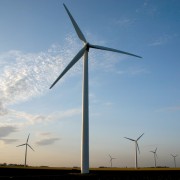
China is rich in wind resources. The windiest locations are the southeast coastal areas, adjacent islands, Inner Mongolia, Xinjiang, the Gansu Hexi Corridor, Huabei and the Qinghai Tibetan Plateau. The country as a whole has potentially exploitable resources of approximately 1,000GW. There is also large offshore potential. The government’s overall commitment to renewable energy and carbon emissions reductions has created a political, legal and financial framework that has given rise to a massive expansion of wind energy. In particular, the Renewable Energy Law provided a solid legal framework and policy direction that has greatly benefited development of the sector. Governmental policy is centrally determined, resulting in a coherent development strategy that links the production of turbines to their use. This has enabled China to become the country with both the biggest wind energy use, and also the biggest manufacturer of wind turbines. According to the Global Wind Energy Council (GWEC), in 2012 China led the global wind energy market for a third year in a row, adding 17.63 GW of new wind capacity in 2011. It estimates that in 2011, 71.5 billion kilowatt hours were generated by wind in China, making up 1.5% of the national total electricity output. GWEC projects that China’s wind power capacity is likely to reach between 200-300 GW by 2020 and over 400 GW by 2030; this would mean that wind power would supply about 8.4% of total electricity consumption, and 15% of installed capacity in China. This massive expansion of the sector has taken place within the space of just a few years. In comparison, in 2007 GWEC and Greenpeace issued a report that predicted that China’s installed wind power capacity could reach 122 GW by 2020, if more ambitious targets were set, and that without new targets, China’s installed capacity of wind energy could reach 50GW by 2020, accounting for about 4% of the total installed generation capacity. If the policy environment could be further improved, the installed capacity of wind energy could reach 80GW by 2020, accounting for 7% of installed capacity. However, if the Chinese government could give full policy support to wind power, then the installed capacity of wind energy could exceed 120GW by 2020, accounting for up to 10% of the total installed capacity of the country. The 2012 figures far surpass even the most optimistic of these figures. The sector is expected to continue growing massively in the years ahead.
[learn_more]
By the late 1980s, the National Meteorological Bureau carried out the second general investigations into China’s wind resources, and a third investigation was carried out in 2004-2005. There have been three main stages in the recent development of grid-connected wind farms. Demonstration projects were undertaken between 1986-1993. 1994-2003 saw a period of industrialization and technology development, as proposed by the former Ministry of Electric Power. 2003-2007 saw a scaling-up of the sector’s development and the domestic production that enabled commercialization of the industry. This was under the leadership of the National Development & Reform Commission. The government views wind energy as complementing hydropower, owing to the fact that wind is abundant in the spring, autumn and winter but poor in summer, while hydropower resources are abundant in the summer. This means that wind energy is able to compensate for the lack of electricity generation from hydro-power in the spring and winter.
There are 7 nationally defined “wind energy bases”, in the country’ windiest areas. Most of the wind energy development being promoted is large-scale turbines in large-scale grid-connected wind parks. However, there is also an important use of small-scale wind energy used for off-grid supply in some areas, such as Inner Mongolia, and China now has the largest off-grid market in the world. This option is mainly used to provide electricity in areas that are not covered by the grid, and whose main population are herders, fishermen and peasants. In particular, 2011 saw a scaling up of decentralized wind energy projects in remote windy areas. Although there is a major potential, offshore wind has been developed at a slower pace. There is currently only one completed offshore park, near Shanghai, there are a number of offshore parks in various stages of planning and construction. However, a massive expansion of offshore is being planned, and this will soon become a central element of China’s wind sector. Shanghai has become the host of a major annual international conference about off-shore wind energy.
Ownership in the sector is defined by a complex mix of state and private ownership. Wind project investors and developers are chosen through a bidding process. This strategy has two objectives: to expand the rate of development and improve the manufacturing capacity of domestically made parts, and to lower power generation costs and reduce electricity prices. Between 2003-2006 there were four rounds of bidding. In the fourth round of bidding, there were 17 bidders and all of them were state-owned enterprises. For example, a major player is the China Longyuan Electric Power Group Corp. This company, which is a wholly owned subsidiary of China Guodian Group Corp., operates 32 wind farms in China. On the other hand, the turbines themselves are manufactured by private companies. Earlier wind parks included mainly foreign manufactured turbines, such as Vestas, Zond, and Micon, (companies from Denmark and the USA), amongst others. However, the growing market for wind power has encouraged domestic production of wind turbines, and more recently constructed wind parks mainly use Chinese technology.
By the end of 2006 there were more than 40 Chinese companies involved in manufacture of wind turbines. Again, according to GWEC, at the end of 2011, four Chinese manufacturers were among the global top ten; Goldwind leading the league with a total installed capacity of 3.79GW, ranking number two right after Vestas, followed by Sinovel (No. 7 with 2.95GW), United Power (No.8 with 2.86GW) and Mingyang (No. 10 with 1.18GW). The global top 10 manufacturers accounted for 78.5% of the global annual market, out of which the four Chinese companies accounted for 26.7%. These companies, which are privately owned, have received important subsidies from government in order to develop. Given that the cost of turbines is approximately 70% of the total investment in a wind project, domestic production is considered to be a necessary pre-condition of large-scale development of the wind sector. Production of turbines occurs nearby to where the wind turbines are installed (ie in the seven wind energy bases), to avoid transport costs. Wind turbines manufactured in China are about half the price, or less, than those manufactured in other countries. Another important factor in relation to costs is that the cost of equivalent labour is cheaper than in other established centres of wind turbine manufacture, such as Germany, Denmark, Spain or the USA.
The main industry grouping is the China Wind Energy Association. Foreign wind turbine manufacturers are also producing equipment in China, with their own facilities (eg Vestas, Siemens, Gamesa, GE), as well as in Joint Ventures together with Chinese companies. Until recently, it was required that at least 70% of production of turbines had to be locally manufactured. This was a key component of the government’s strategy to stimulate the industry. However, this restriction has recently been lifted, partly owing to the fact that it had already served its purpose. In addition to turbine manufacturing companies, China’s capacity to manufacture wind turbine components, such as blades or gear boxes, is also growing rapidly. However, this is stronger in some areas than in others, and in some areas, such as the manufacture of wind measuring equipment, China still lags behind other countries. Also, as with other branches of China’s renewable energy sector, the wind sector experiences problems due to weak levels of certification and industry standards. However, without wanting to downplay such problems, China has had incredible success in developing its industry in a short space of time. The country has also become a world leader, if not the world leader, in the manufacture of small wind turbine technology, to use in off-grid systems, and the China Wind Energy Association has, for the last several years, collaborated with a Danish wind energy organization to produce an annual global catalogue of small wind turbine manufacturers.
New legal frameworks make it compulsory that manufacturers manufacture at a certain minimum level of capacity. This is likely to accelerate the process of consolidation and concentration of the sector, a process which is already underway. This increasing tendency towards monopolies in the sector will greatly increase the ability of Chinese manufacturers to compete globally. China is already one of only a small number of countries capable of mass production of wind turbines, and its role is likely to increase greatly in the years ahead. European turbine manufacturers, such as the Danish company Vestas, or the Spanish Gamesa, are finding it extremely difficult to survive in the face of Chinese competition, despite having been pioneering companies in the sector and having enjoyed a continued and strong presence as leading turbine manufactures for many years. A very likely scenario in the coming years is that these European companies (as well as others) will go under, and be bought out by Chinese companies. This would massively change the global landscape in the wind-energy sector.
Most Chinese turbine production is still for the Chinese market. However, increasingly the turbines are being produced for export, as production costs are much lower and Chinese companies are increasingly able to compete globally. For instance, Ecuador is developing its first wind park, and will use Chinese turbines. This trend is likely to continue in the years ahead. Significant trade conflicts are emerging between China, and the USA, as well as between China and Canada, both within and outside of the World Trade Organization (WTO). The industry’s subsidies are now being reduced due to WTO rulings.
There can be no doubt that the expansion of the Chinese wind-sector is a major success story. It is a technological and industrial triumph, a policy triumph, an economic and commercial triumph, and a strong commitment to low-carbon energy technology. However, it is also important to mention some of the problems. Some of these problems are well documented, while others there is scarce information about, and even less in the way of systematic analysis. There is a great need to do further research on these questions.
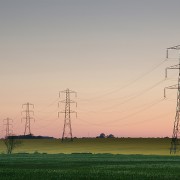
One problem that is widely acknowledged, both by policy makers and industry itself, is the fact that the locations with the best wind resources do not correspond to the areas with the high consumption of electricity. This means that, once generated, electricity must then be exported to areas of the country where demand is heavier. This means heavy reliance on the grid. Currently, the grid is not always able to integrate electricity generated by wind, creating a disjuncture between the installed capacity and the amount of electricity consumed. According to a report by the China Electricity Council in 2007, about one-third of China’s wind turbines were idle. To solve power transmission problems, the State Grid has invested 41.8 billion yuan ($6.45 billion) to construct 23,200 kilometres of transmission lines. However, even this amount is not considered to be enough. This is one of the major obstacles preventing an even greater expansion of the sector, and there is a great need to strengthen the power grid. Although a legal framework exists to guarantee that wind energy must be purchased, the law is actually hard to enforce and has no teeth to punish companies that do not comply with it. Consequently, the grid companies frequently fail to buy electricity generated by wind, as they view it as less stable and reliable supply than electricity generated by coal. This is considered to be a big problem. New regulation will mean that wind farms have to include elements to ensure their predictability and stability of supply, otherwise they will not be allowed to connect to the grid.
Another area of problems that is also openly acknowledged is the fact that, despite their impressive growth, Chinese wind turbine manufacturers are themselves also facing intense price competition, excess production capacity and government tightening of regulations related to the industry. They are also operating within the context of the world-economic and financial crisis. In recent months, the major companies have, through their own figures, indicated the extent of the problem. Sinovel Wind Group Co, China’s largest wind turbine maker, reported that its profit growth had slowed to 1 percent in the first quarter of 2012 even as sales rose 20 percent. Earnings soared 51 percent in 2010. Xinjiang Goldwind Science & Technology Co, the nation’s second largest, said net profit fell 17 percent to 206.2 million yuan ($31.8 million) in the first quarter of 2012. Sales remained flat at 1.86 billion yuan. There has also been recent concern from Xi Jinping, the new general secretary of the Chinese Communist Party, that the sector is expanding too fast, and that companies have to urgently address the problem of excess capacity in the manufacturing of wind turbines, otherwise this will cause major social problems including major job losses.
Employment in the sector is growing rapidly as the sector expands, and there are some reasons to believe that work in the renewable energy sector is quite well-paid relative to other sectors in China. However, it is not very easy to get any concrete information about work in the sector, including also just basic statistics about employment numbers. Neither policy documents, NGO reports, industry nor foundation reports discuss the issue in any great depth. It is unclear whether or not the All China Federation of Trade Unions is organizing workers in the sector or not. A wide range of Hong Kong based organizations that work on labour conditions in mainland China are also not working on the issue, and do not have any knowledge of work in the wind sector (or other branches of the renewable energy sector). It is unclear why no one is working on the issue and what it means. It may simply mean that it is not an important area to work in, and that working conditions in the sector are satisfactory and that no new workers struggles are emerging in the sector. However, it may also mean that the area is important, and that it is an urgent area for people to start thinking about and to research further.
Scattered articles in newspapers and global wind industry journals suggest that the latter is in fact the case, as does a reading of how the sector is evolving in other countries. Windpower News, one of the main global wind industry journals, reports a small number of worker deaths in labour accidents in the installation of wind parks, as well as in turbine factories. It is not clear whether these were one off accidents, or if such health and safety issues are occurring more frequently. However, this number is, without any doubt, fairly small, especially in comparison to the number of deaths in the Chinese coal sector. Furthermore, deaths in the wind sector are by no means unique to China either. There have also been fatal accidents in Germany and in the USA, and in the USA Vestas have been fined for violating health and safety conditions. Another important area that needs futher study is the impact of China’s growth as a wind energy centre on workers in the wind energy sector throughout the world, given that the cost of labour in the sector in China is cheaper than it is elsewhere. Competition between workers in the global wind industry can be dangerous for all workers. Currently, the US Steel Workers are supporting the protectionist measures of the USA, in its ongoing conflict with China at the World Trade Organization in relation to the wind sector.
The issue of job losses may also become important, as warned by Xi Jinping. Sinovel has already reported job losses, and seen early rumblings of worker protest. Certainly this issue has become important in other wind turbine producing countries. Amidst government and corporate hype about “green jobs”, often also echoed by a range of environmental organizations, there have already been, or are expected to be soon, substantial job losses in the wind sector in USA and Spain (as well as in the solar sector in Germany). In the UK there were worker protests, which received widespread support throughout the country, over job losses in the sector.
Another issue that needs to be investigated further is the question of land. Most large wind parks are in rural areas that are not heavily populated, or even very sparsely populated. However, there is some population living in the areas with wind parks. These are often ethnic minorities, and people with little political or economic power. Initial indicators suggest that, while there may be some minor impacts reported by local inhabitants, most impacts are not reported as being significant. Although very often local communities do not get a large share of the economic benefit out of the wind development, they do in general receive electricity at a fair price. While animal grazing and other animals (such as horses in Inner Mongolia) may be temporarily affected by the changes, most changes are not permanent. In some areas in Inner Mongolia, the local government has even promoted tourism for people to visit the wind park. Local villagers have gained economically from this through horse rides, however, the large accommodation resort, which is the main profitable tourist activity, is not owned by locals. There was also an incident reported in Reuters in May 2006 about a number of deaths that occurred when peasants protested inadequate compensation due to wind turbines near the village of Dongzhou in Guangdong province, and the police shot them dead. It is unclear whether such an example is a one-off incident or whether such incidents occur more frequently. Similarly, it is unclear how important it was that such an incident occurred in relation to wind energy, or whether it is more linked to the wider issue of land politics and land-use conflicts which are occurring in China at a more general level. However, given that major land conflicts have developed in other parts of the world in relation to wind energy development that takes place in the lands belonging to marginalized communities (most notably in Oaxaca, Mexico, where a number of indigenous community leaders and activists have received death threats and have had to go into hiding), it seems to be an area that it would be important to do further research on.
However, as mentioned above, the fact that there some problems and challenges relating to the sector, does not detract from the fact that China has in a remarkably short space of time become the world leader in the wind sector. This is an admirable achievement and there are many important lessons that can be learnt
[/learn_more]
Solar Energy
There are three important aspects of solar energy technology that are being developed in China: Solar photovoltaic (PV), Concentrated Solar Power (CSP) and solar water heaters (SWP). Great advances have been made both in relation to the use of these technologies more meeting energy needs, but also in terms of the manufacturing capacity for the necessary infrastructure.
[learn_more]
While, the Renewable Energy Law is proving more complex to implement for PV than for wind power, the achievements in the sector have nonetheless been considerable. With assistance from the World Bank/ Global Environment Fund, the Chinese government has designed a programme to promote household solar PV systems in the nine provinces of Western China, including Inner Mongolia, Tibet, Qinghai, Gansu, Xinjiang, Shaanxi, Yunnan, Ningxia and the west part of Sichuan. There is a solar PV power station in the desert at Yangbajing, Tibet, which when built in August 2005, had the largest installed capacity ( 100 kWp ) of any grid connected PV power station in the world.
A major government programme, which ran from 2002 to 2004, was the Township Electrification Programme. The Programme received 2 billion RMB from central government and 1 billion from local government, and introduced electricity supply , using PV cells, as well as wind-solar combined systems, to over 700 villages, which means over 200,000 households with about 1 million people. The project is the world’s largest rural electrification project of this nature.
However, the biggest potential solar PV market is large-scale desert power plants in the desert, especially in the west of China. The Ministry of Science and Technology has supported the construction of four pilot projects of desert PV stations in Gansu, Tibet, and Sichuan. However, to develop the solar potential of these areas to the full, there is a need to undertake major new construction works, in order to build the transmission and storage infrastructures that are necessary. This means, that the sector still has a large potential for expansion, and is likely to play a much more serious role in meeting China’s energy needs in the future, than is currently possible.
The country has other notable examples of the use of solar technologies. The city of Shenzhen has the largest grid-connected solar PV system in Asia. There are also grid connected PV systems operating in other cities, including Shanghai, Beijing, Nanjing, Wuxi, Baoding and Dezhou.
Solar water heaters are also used extensively in China, both in urban and rural areas. By 2008, over 60% of the world’s solar heaters were used in China. Already since 2005 it has been the country with the highest level of use in the world. The country has also become a world leader in the manufacture of solar water heaters.
China has also become a global centre for the manufacture of solar PV cells. In 2011, 6 out of the world’s top 10 solar cell companies were Chinese, and this included the world’s top 4 companies. These companies are: J.A. Solar, Suntech, Trina Solar, Yingli Green, Canadian Solar, Hanwha (the latter two companies are partly Canadian and Korean companies, respectively). Importantly, several of these are vertically integrated companies.
These companies are rapidly becoming global players and developing a big export market, especially in western Europe and north America, but also elsewhere, including the development of solar parks in Kenya, and a solar plant in Bulgaria. South Africa is also a recipient of large numbers of solar water heaters that have been manufactured in China.
As with wind energy, the Chinese solar energy sector is a remarkable story of great technological, industrial and commercial success, in a very short period of time. However, there are also some concerns. In 2011, there was an important incident in Haining, an industrial city in the coastal Zhejiang province. Mass protests took place against the local contamination that was caused by a large solar cell manufacturing plant, and the government intervened to force the plant to close. Another growing concern is that China’s global dominance in the export of solar equipment is that this creates difficult conditions for other countries to develop their industries. An example of this is that in South Africa, some trade unions report that South Africa is unable to develop a significant solar water heater manufacturing industry, as companies are not able to compete with imports from China.
[/learn_more] |



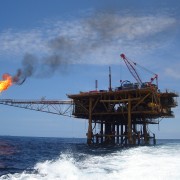
 The government follows the principle of unified planning and step-by-step implementation. It has built its national oil reserve bases and expanded its oil reserve capacity. It has gradually established a guarantee system for oil and natural gas supply emergencies to ensure secure supplies of energy. At the technological level, it is accelerating its development of deep sea drilling, and other technologies for prospecting and exploiting petroleum and gas resources under complicated geographical conditions, as well as for maximizing the efficiency in the way it exploits is low-grade petroleum and gas resources. On a separate note, China has some of the biggest shale gas resources in the world. Until now, there has been no major commitment to exploit these resources at the current moment, although this is likely in the future. Currently a pilot project exists and a US-China agreement has been signed.